Home/Itinerary

Five days from Kathgodam to the summit and back.

A standard 5-day itinerary through Lohajung – Bekaltal – Brahmatal – Summit – Lohajung. Snowy forests, frozen lakes, wide Himalayan views. Beginner-friendly with room for a 6-day slower variant.

5 days · 4 nights

Kathgodam meet-up to Kathgodam drop-off, with 4 nights on trail.

≈ 24 km on trail

Split as 7–8 km / 7 km / 5–6 km / 4 km across four walking days.

12,150 ft max

Gradual altitude — Lohajung 7,600 ft → Brahmatal Camp 10,450 ft → Summit.

Who this itinerary suits

Perfect for a first snow trek.

Good fit

  • First-time Himalayan trekkers
  • Photographers wanting snow scenes and mountain sunrises
  • Anyone wanting a moderate winter trek without the risk of a high-altitude route
  • People looking for a short 5 – 6 day adventure from Delhi/Kathgodam
  • Families with children 10+ who can walk 6–7 km in a day

What's included in every batch

  • Accommodation — 1 night guesthouse + 3 nights alpine camps
  • All meals during the trek days
  • Certified trek leader & support guides
  • Forest permits and camping fees
  • Camping gear (tents, sleeping bags, mats)
  • Safety equipment (oxygen, first-aid kit, crampons/gaiters)
The route, day by day

Tap any day to see the details.

  • Meet at Kathgodam in the morning.
  • Start the drive to Lohajung. The journey takes around 9 hours with breaks.
  • On the way, you'll see the Kosi and Pindar rivers and pass towns like Almora and Kausani.
  • You'll also get your first view of Nanda Ghunti Peak as you approach the Chamoli side.
  • Reach Lohajung and check in at your guesthouse or homestay.
  • Have dinner and rest for the night. Brief with the trek leader at 8 PM.
  • Have breakfast and start your trek.
  • The trail is easy and well-marked.
  • It takes around 5 hours to reach Bekaltal.
  • Enjoy views of the Kali Valley.
  • Cross a small wooden bridge at around 8,500 ft.
  • Reach Bekaltal Lake — a peaceful and scenic camp.
  • Relax at the campsite, have dinner and rest.
  • Wake up early and enjoy the sunrise from Bekaltal.
  • Have breakfast and begin trekking towards Brahmatal.
  • The initial climb is steep; the trail becomes easier later.
  • Walk through beautiful oak and rhododendron forests.
  • Reach Brahmatal Lake, which stays frozen through winter.
  • Settle at your campsite near the lake.
  • Have dinner and sleep under a clear night sky.
  • Have breakfast and start walking toward the summit.
  • Pass through Chota Jhandidar and Bada Jhandidar.
  • You will need about 2.5 hours to get to the top.
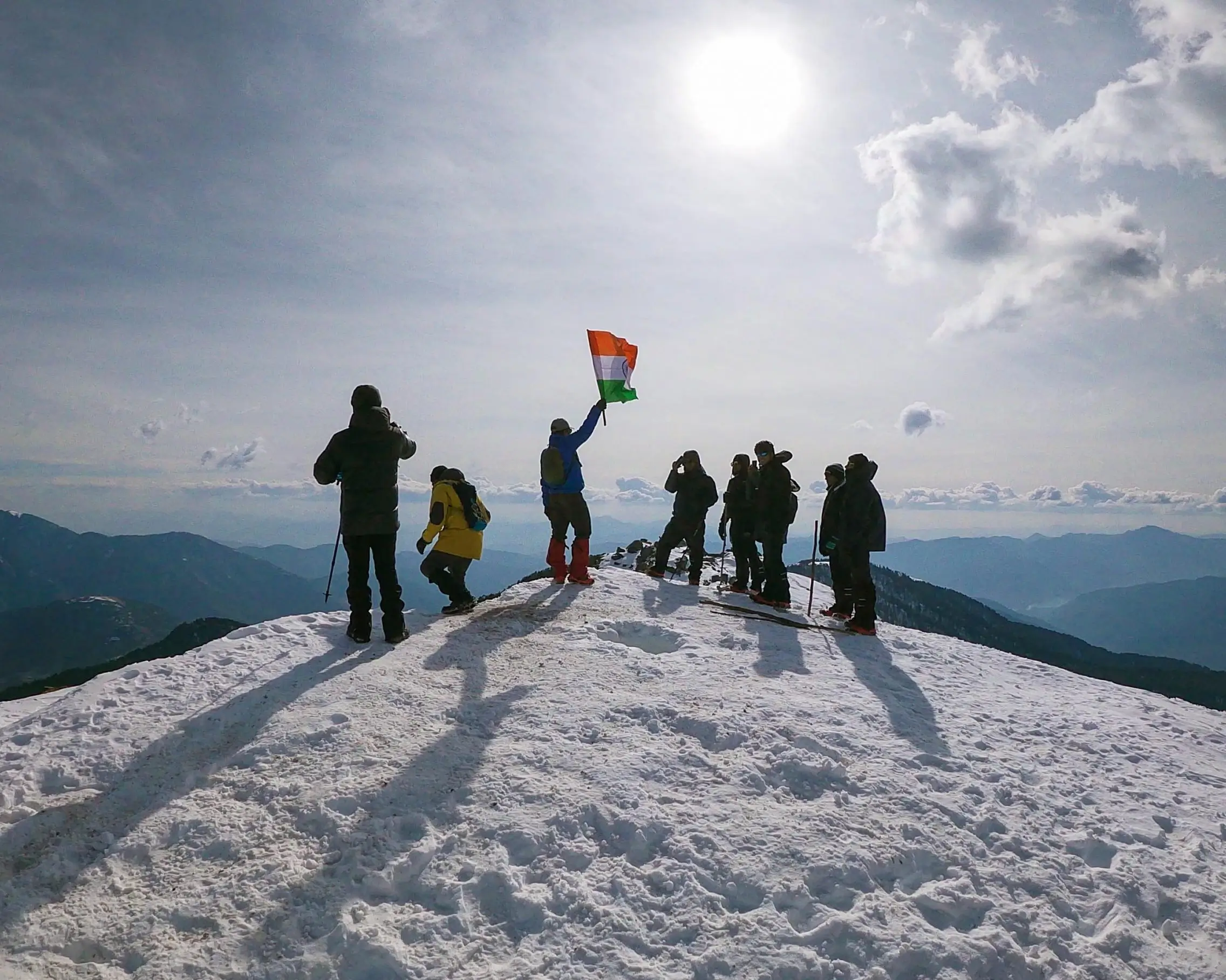
  • From the top, you can see beautiful and wide views of the Himalayan mountains — Trishul, Nanda Ghunti and, on a clear day, hints of the Roopkund trail.
  • After spending time at the summit, descend towards Daldum, about 2.7 km away.
  • Reach the campsite, have dinner and rest.
  • Start your day with breakfast and begin your descent.
  • Walk down through forests of oak and rhododendron.
  • Cross small streams along the way.
  • Reach Lohajung and end the trek.
  • From here, you can drive back to Kathgodam, Rishikesh or continue to your next destination.
Extended variant

The 6-day version.

Some trekkers prefer a 6-day itinerary for Brahmatal. This extra day is usually added for better acclimatisation or as a buffer for bad weather. A longer plan also gives you more time for activities like visiting Ajan Top, an extra night at Bekaltal or Brahmatal for photography, or enjoying the snow at a slower pace.

That said, the 5-day itinerary is our default recommendation — it gives the right balance of trekking, rest and altitude gain without stretching the schedule.

What to expect on trail

Daily highlights & challenges.

Scenic highlights — snow-covered forests (Dec–Feb), frozen Bekaltal & Brahmatal lakes, Himalayan sunrise from the summit, and clear early-morning views of Trishul & Nanda Ghunti.

Altitude & weather — highest point 12,150 ft. Winter temperatures 0°C to –7°C. Expect snowfall on higher campsites. Nights are freezing but manageable with layers.

Seasonal variations — Dec–Feb: deep snow, dreamy forests. March–April: clear trails, rhododendrons bloom. May: pleasant sunny days, fewer crowds.

Tips for an optimal experience

Small things that make a big difference.

Acclimatisation & pace

Rest well on Day 1 before starting the trek. Walk slowly and steadily, especially while climbing. Drink enough water even if the weather is cold.

Packing smart

Carry 3–4 warm layers. Bring waterproof gloves, trekking poles and gaiters. Wear good-quality snow trekking shoes. Keep a power bank and thermal innerwear with you.

Safety

Always trek with trained and certified guides. Listen to your guide carefully during snowfall or bad weather. Avoid walking alone near high or narrow areas.

Itinerary questions

Common questions, plain answers.

Yes, you can, but the trek becomes too fast and tiring. You'll have to walk longer hours and your body may not get time to adjust to the height. The 5-day plan is safer and more comfortable.

You can do it solo, but it's not recommended. The trail has deep snow, no mobile network, and some risky sections near the summit. It is safer and easier to trek with a group or a guide — solo travellers are welcome on our group batches.

If the weather becomes bad, your guide may change the plan. They might take a safer route, delay the summit or use a buffer day. Safety is always the top priority.

Yes, the road is usually open. But during heavy snowfall in January and February, the drive may become slow. Local drivers and jeeps know the route well and ensure safe travel.

Ready?

Pick a batch, lock a date.

Winter batches fill fast. A quick call is the fastest way to check what's open.