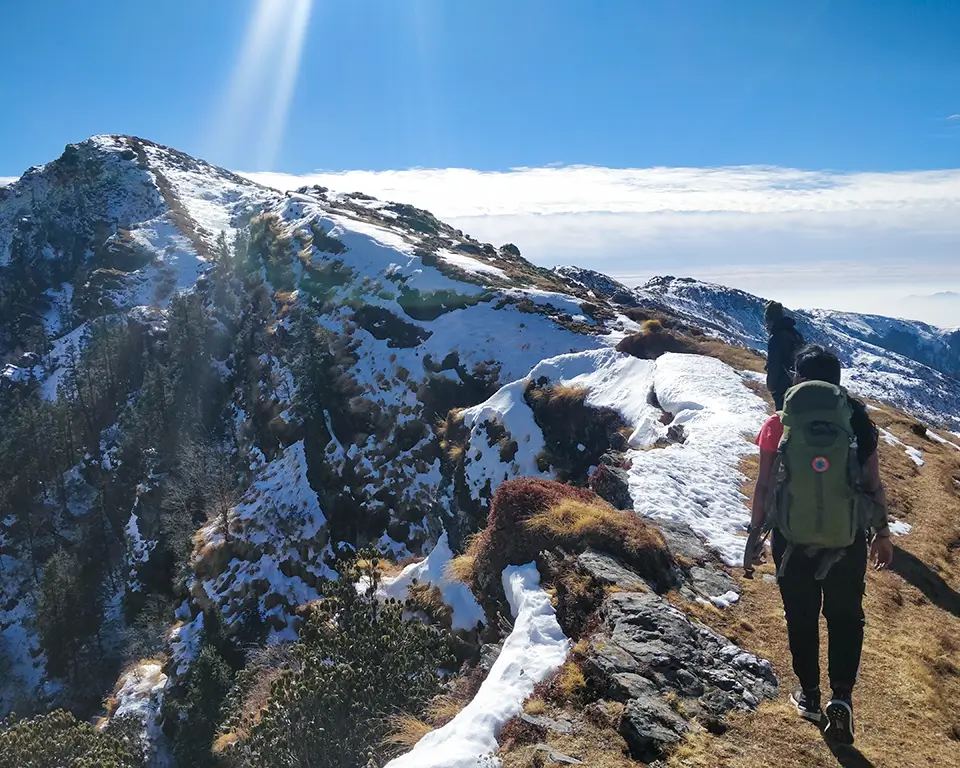
Brahmatal is a beginner-friendly trek, but "beginner-friendly" and "winter Himalayan" are two things that always live in tension. Snow hides holes. Ridges channel wind. Nights are properly cold. Most trek incidents aren't from anything dramatic — they're from small errors compounding: wet socks, skipped meals, forgotten headlamps.
This guide is what our trek leaders wish every first-timer knew before Day 1.
The three rules our guides teach on Day 1
- Never break from the group. If you need to slow down, someone slows with you. If you get ahead, you wait at the next visible point. No solo detours "just for a photo".
- Tell someone how you feel. Any headache, nausea, shivering that won't stop, or numbness in fingers/toes — say it out loud. There is no prize for pushing through in silence.
- Trust the turn-back call. If the trek leader turns the group around, that call is final. Weather changes fast at 12,000 ft. The mountain will still be there next season.
Cold weather — the small things that matter
Dress in three layers
A moisture-wicking thermal base, an insulating fleece middle, and a windproof/waterproof outer shell. You'll add or remove layers throughout the day. As soon as you stop walking, put your puffer jacket on — don't wait to feel cold. By the time you feel cold, you're already behind on warmth.
Keep your extremities covered
Fingers, toes, nose, ears. Wear a warm hat inside your sleeping bag at night. Sleep with tomorrow's socks and thermals inside your bag so they're warm when you dress.
Stay dry
Wet clothes make you cold fast. Change out of sweaty layers when you reach camp. If you sweat on a climb, unzip and vent — don't marinate in a wet shirt.
Eat everything you're offered
Your body burns roughly 30% more calories in the cold. Skipping meals is a fast way to feel awful the next day. Even if you're not hungry, eat.
Drink water even when you don't feel thirsty
Cold suppresses thirst but dehydration doesn't. Aim for 3 litres a day. Insulated bottles matter — regular plastic bottles freeze.
Trail etiquette on snow & ice
- Follow the boot-pack. Walk in the footprints of the person ahead. Fresh snow beside the trail can be knee-deep or hide a rock.
- Kick-step on steep sections. Push your toe into the snow to make a solid platform before shifting weight. Don't rush.
- Use trekking poles. Two, not one. On steep snow they save your knees; on ice they save your face.
- Never glissade blindly. Sliding down a slope in play is fun — until you hit a rock buried under the snow. Ask your guide before you slide anywhere.
- Keep three points of contact on slippery sections. Two feet + a pole always planted somewhere solid.
Recognising altitude issues
Brahmatal tops out at 12,150 ft — high enough for a small number of people to feel mild altitude discomfort. Signs:
- Persistent headache that doesn't go away with water and rest
- Nausea or loss of appetite
- Trouble sleeping, or waking up gasping
- Dizziness or feeling wobbly beyond what tiredness explains
What to do: tell your guide. Drink water. Eat something. Rest. Most cases resolve with acclimatisation and paracetamol. If symptoms worsen, our leaders will begin descent — this is protocol, not panic. Going down 500 m usually resolves the problem completely.
Wind on ridges
The Brahmatal summit ridge and Jhandidar sections can channel serious wind, especially in Dec–Feb. Two things matter:
- Wind chill lies about temperature. A 5°C day can feel like –10°C in 40 km/h wind. Always have your windproof shell on and hood up on exposed ridges.
- Watch for windburn. Any exposed skin — cheeks, nose — needs high-SPF sunscreen even in winter. Lip balm is not optional.
Snow blindness — the injury nobody expects
Sun reflecting off fresh snow can cause temporary blindness in a few hours. Symptoms: gritty feeling in the eyes, headache, light sensitivity, streaming eyes. It's fully preventable with UV-protected sunglasses. Wear them the entire time you're above the tree line, even when it's cloudy. Reflected UV is high on overcast days too.
What our guides carry
Every batch runs with:
- Portable oxygen cylinder and pulse oximeter
- Full first-aid kit including altitude medication
- Satellite communication device for emergencies
- Rope for icy exposed sections
- Emergency shelter (bivvy) in case someone can't move down
- Weather updates from the forest department each morning
- Evacuation plan pre-briefed on Day 1
None of these are used often. All of them are used sometime.
When to turn back
Turn-back calls happen. Reasons we've turned batches back:
- Wind above 60 km/h on the summit ridge
- Fresh snow depth over knee-height with unstable slab
- One or more trekkers showing altitude symptoms that don't resolve
- Weather advisories from the forest department
- Visibility dropping under 20 metres in whiteout
If we turn back on summit day, we usually offer a re-attempt from Daldum the next morning if the weather allows, or add a buffer day at Brahmatal camp.
The mountains have a saying: it's the trip you turned back on that let you come back for the next one.
Before you leave home
- Get travel insurance. We don't sell it; buy it from any major provider before the trek.
- Do 20–30 minutes of light cardio (walking, cycling, jogging) for 2–3 weeks before the trek. Even a small amount of preparation makes a noticeable difference.
- Check with your doctor if you have asthma, heart conditions, or take regular medication. Get a written note.
- Break in your boots on training walks. Blisters ruin more treks than snow ever does.
- Save your trek lead's number the moment we share it. Have it accessible offline.