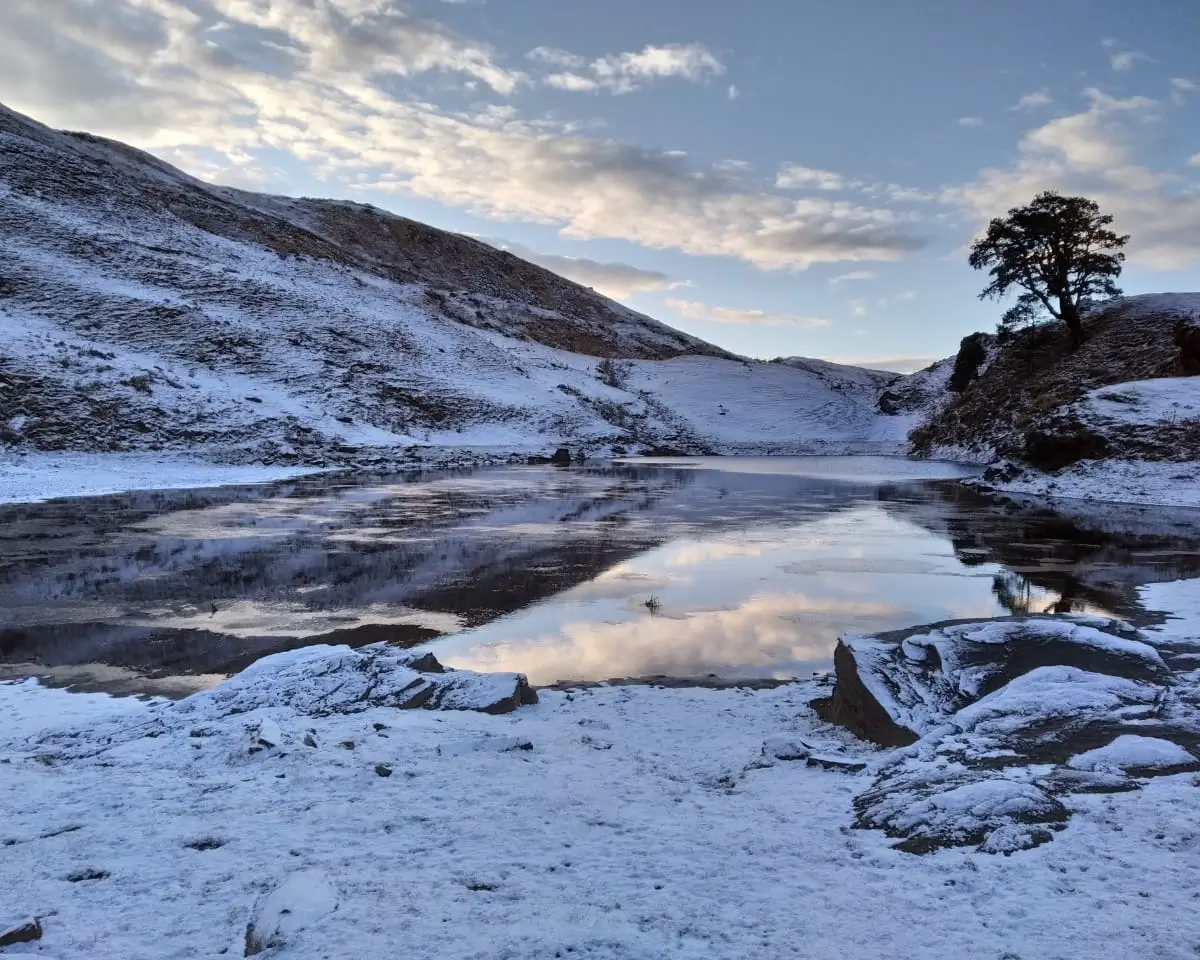
Brahmatal's weather changes completely with every season. Every few months, the experience is almost entirely different from the previous one.
Winter (December – February) is very cold and snowy. Temperatures fall below freezing, typically between –5°C and 5°C. Heavy snowfall covers the trail and both lakes freeze. It's a white wonderland to look at, but trekking is harder work.
Spring (March – April) is pleasant and refreshing. Days are cool and sunny, with temperatures between 10°C and 20°C. Snow melts slowly to reveal green meadows. Very comfortable for trekking.
Summer (May – June) is mild and clear. This is the peak season for non-snow trekking. Days are 15°C to 25°C. Nights are still cool. The sky is usually clear with great mountain views, and Brahmatal Lake is fully thawed.
Monsoon (July – September) is wet and risky. The region receives heavy rainfall. Tracks become slippery and muddy. Landslides are a real hazard. We don't run trips in these months.
Autumn (October – November) is cool and crisp. The rain has stopped. The air is clear. Daytime temperatures are 5°C to 15°C. Visibility of the Himalayan peaks is excellent before winter sets in.
Checking the weather is about more than knowing the temperature. It's a genuine safety and comfort question.
Here's a simple guide to average temperatures and conditions each month:
Temperature: –7°C to 5°C. Very cold, below freezing.
Conditions: heavy snow. Brahmatal Lake is frozen solid. Trekking is for those willing to layer up properly.
Temperature: –5°C to 7°C. Still very cold.
Conditions: lots of snow on the trail. The landscape is beautiful and white. Good winter clothing is essential.
Temperature: 0°C to 15°C. Cold mornings, pleasant afternoons.
Conditions: snow starts to melt. Days are sunny and comfortable. Nights still chilly.
Temperature: 5°C to 18°C. Cool and comfortable.
Conditions: one of the best months. Green meadows appear. Clear trails and great mountain views.
Temperature: 10°C to 22°C. Mild and pleasant.
Conditions: perfect trekking weather. Brahmatal Lake is fully thawed. Days are warm, nights cool.
Temperature: 12°C to 25°C. Warm days.
Conditions: the last month before the monsoon. Long sunny days. Best for clear mountain photography.
Temperature: 5°C to 16°C. Crisp and cool.
Conditions: monsoon is done. Clean air and clear skies. Excellent visibility. Nights get cold.
Temperature: 0°C to 12°C. Cold, especially at night.
Conditions: winter begins. Early snow possible at higher points. Beautiful autumn foliage.
Temperature: –5°C to 8°C. Cold and snowy.
Conditions: snowfall is common. The trek becomes a winter adventure. Requires serious preparation.
Note: July, August and September are not recommended for trekking due to heavy monsoon rains, slippery trails and landslide risk.
Snow is one of the main reasons people trek to Brahmatal. Here's a rough map of when the mountain wears its white coat.
Best time to see snow: mid-December through end of February. For the deepest cover and the fully frozen lake, aim for January. For milder-but-still-snowy conditions, late December or February. For last snow with fewer crowds, early March.
Understanding day-vs-night temperature differences is what tells you how to layer. There's often a huge gap between how hot the sun feels while walking and how cold camp gets after sunset.
Daytime (while trekking): cool to mild when moving. Sun can feel warm in open meadows. Most people trek in a light jacket or fleece.
Nighttime (at camp): always cold. The moment the sun sets, temperature crashes. You'll want your warmest layers — heavy jacket, hat, gloves — the second you stop walking.
Sudden temperature changes. A warm sunny day can become cold and windy in minutes. Dress in layers so you can add or shed clothing quickly.
Cold nights at high camps. Nights at Brahmatal camp are properly cold. Bring a sleeping bag rated to at least –10°C, a warm jacket for camp, a hat and gloves.
Snow and slippery trails (winter & early spring). Ice patches. Use good boots. Microspikes or gaiters help. Walk slowly and use poles for balance.
Rain and muddy trails (monsoon). Bring a waterproof jacket, a rain cover for your backpack and quick-dry clothes. Trekking poles help on wet ground.
Strong winds on ridges. Open ridges near the summit can be windy and feel much colder. A windproof shell layer is essential.
Altitude discomfort. Even at 10,000+ ft, some people get headaches or nausea. Walk slowly, drink water, and tell your guide immediately if symptoms appear. Don't tough it out.
Weather doesn't just change the view — it changes the challenge.
Easy to moderate: late spring (April) & autumn (October–November). Trails dry and stable. Comfortable walking weather.
Moderate to challenging: winter (Dec–Feb) & summer (May–June). Winter requires more energy, special gear, and cold tolerance. Summer needs proper hydration in the sun.
Not recommended: monsoon (July–September). Continuous rain, thick mud, unstable slopes, poor visibility.
If it's your first snow trek, choose spring or autumn. Try winter if you want an adventure and are willing to gear up properly. Skip the monsoon — no view is worth the safety trade-off.